Thursday, July 22, 2010

Kiss it Good-bye by John Moody

Kiss It Good-bye: The Mystery, the Mormon, and the Moral of the 1960 Pittsburgh Pirates was a trip down memory lane for me. Moody grew up in the Pittsburgh area in the late 50s and early 60s and relates how the city and especially the Pittsburgh Pirates influenced his life. This is such an easy concept to which I can easily relate. I spent most Sunday afternoons at Forbes Field watching double headers with my family. My mother would pack us a picnic lunch/dinner (usually ham salad sandwiches and potato salad, cookies and lemonade) and we would make a day and sometimes an evening out of it if a game would go into extra innings. Those were the days when you could bring food into a ballpark and not have to worry about having your children hear inappropriate language. It didn't matter that the Pirates were a horrible team, they were our city's baseball team and we knew all the player stats and had our own family favorites. My brother loved Bob Skinner, my dad, Bill Virdon, Mom's was Dick Groat and mine was Bill Mazeroski. We kept score for every game we saw and loved the Bucs. When we weren't at Forbes Field we sat on our patio and listened to Bob Prince and Jim Woods on the radio as he announced the games. We all knew his nicknames for the players, his signature phrases and most of all we enjoyed the way his excitement became ours.

In Moody's book we are able to relive this era as the author tells the story through the eyes of Vernon Law, the Cy Young winner of 1960. Law, the ace pitcher of the team, is a devout Mormon who distanced himself from alcohol and profane language. He was recruited by a member of the Pirate Board of Directors - Bing Crosby. The mystery is the accident that happened on the plane after the Pirates clinched the pennant in Milwaukee. Many of the Pirates were drunk that evening and celebrating, during the course of which Law's ankle was hurt. This change the course of the rest of the season and World Series. It had never been revealed who had been responsible for the injury until the publication of this book.

The desire of Danny Murtaugh, Law and the Pirates that year was to bring a pennant to the long suffering city. Their resurgence was a parallel to the renaissance that the city was experiencing. It was through hard work and a few instances of luck that this happened. It was then that they should bring a World Series title to complete the year. But against the Yankees? Anyone who grew up in Pittsburgh at that time knows the rest of the story and the joy that was felt when Mazeroski hit the 9th inning home run. For many of us, we didn't have voices to scream at that point because of Hal Smith's tying home run the inning before. October 13, 1960 was a glorious day.

Throughout the book are those remembrances from days gone by: Ed and Wendy King's Partyline and the nightly Party Pretzel, the Jenkins Arcade, Pittsburghese galore, and often forgotten Pirates like Gino Cimoli, Ducky Schofield, and Rocky Nelson. It was an uplifting read for the middle of a most dismal baseball season for Pirate fans. Maybe the present day owners should look to the past and see how to bring a team back. Surely there is another Murtaugh and Joe L. Brown out there who can work a little magic for us. Please.......

Saturday, July 17, 2010

The Lion by Nelson DeMille

It is 13 months after the WTC bombings in New York and John Corey, an ATTF detective, and his wife, Katherine Mayfield, an FBI agent, are on their way to Sullivan County, NY to participate in a group sky-diving challenge. Any reader of DeMille knows that it can't be that simple. As the title suggests, Asad Khalil is back in Corey's life and is willing to strike in the most inopportune moments. Let's just say Hannibal Lector is a pussy cat compared to Asad's lion.

It is hard to really give a plot summary of this novel because any description would be tantamount to giving the plot and twists away. The premise is that Khalil has returned to the United States to finish the job left undone in The Lion's Game. The Libyan terrorist is determined to eliminate all those pilots and any other accomplices who had a hand in the bombing that killed his family members that fateful night of April 15, 1986. He has nearly completed his mission with only a few remaining. It is that mission that he will attempt to accomplish on this trip to the U.S.

DeMille has penned an exciting thriller this time around. It seems much more cerebral than some of his previous novels with an extraordinary cat, make that lion, and mouse game going on between Corey and Asad Khalil. There is, of course, much violence and bloodshed, but always a twist or an unexpected turn of events, especially the ending. The action stretches from San Diego to Hollywood to Sullivan County to Manhattan and Brooklyn and keeps the reader on the edge of her seat. Corey is an irascible man, a total alpha male and a master of one-liners. He very much reminds me of the British Inspector Morse, especially with his love of alcoholic libation. In all the tenseness of the novel, there is still the occasional laugh-out-loud comeback or observation that does for a fleeting second lighten the mood. The secondary characters, those men and women of the ATTF and F.B.I are well-developed and secretive enough that the reader can't always be sure that they are on "our side."

A great read that ended too quickly.

Sunday, July 11, 2010

Wolf Hall by Hilary Mantel

WOW! What a well-crafted book that was. Wolf Hall is the fictionalized account of Henry VIII's break with the church in Rome and his obsessive desire to have a male heir to the throne. This story has been told countless times, but what sets this Man Booker Prize winner apart from other accounts is that it chronicles the events from the viewpoint of Thomas Cromwell.

Cromwell was a self-made man who extricated himself from an abusive childhood, joined the French army because France was where wars were fought, memorized the Bible, and learned numerous languages. He returned to England and became a secretary to Cardinal Wolsey. The two had a close and symbiotic relationship until the Cardinal and King Henry became embroiled in the Supremacy struggle as Henry sought to have his marriage to Catherine of Aragon annulled. Cromwell witnesses that Wolsey will not broker this divorce and ingratiates himself with Henry. He becomes the king's most trusted adviser and through his machinations brought about much of the changes (reforms) in both the political and religious realms.

Mantel's novel brings together all the players in this historical time period. For the casual reader and even those steeped in the scholarship of this time, there is a cast of characters for all the venues in the book. From Cromwell's beginning in Putney, to his Austin Friars neighborhood in London, to Westminster, the court, France, and Wolf Hall - home to the Seymours, she identifies those who so impacted the course of English history in the 1520s - 30s. Henry's loss of interest in Catherine, his spurning of their daughter Mary, and his infatuation with Anne Boleyn serve as a backdrop to all of Cromwell's actions as he covets and wields power. As he did with Wolsey, Cromwell does philosophic battle with Thomas More, author of
Utopia, who believes in the papal supremacy. And we all know how that ended.

The novel's impact is heightened as it is told in present tense with flashbacks. Mantel has infused humor and great description into the story. One notable passage is Henry's reaction to the birth of Elizabeth, the princess and future queen. All had expected her to be a him and Henry laments her birth: "The princess, unswaddled, had been placed on cushions at Anne's feet: an ugly, purple, grizzling knot of womankind, with an upstanding ruff of pale hair and a habit of kicking up her gown to display her most unfortunate feature."

One of the most interesting secondary characters was Hans Holbein, the court painter. Holbein was commissioned to paint the important people of his era. His political beliefs can be analyzed through his paintings. Compare his treatment of both Cromwell and More. I was a little amused to read his critiques of Lucas Cranach, a German painter close to Martin Luther. Cranach is my great grandfather - to the 12th power.

This is one of those books that you don't want to end. But then you realize that it will be one that you will revisit in the years to come. An absolutely wonderful read.

Thursday, June 3, 2010

The Ravenscar Dynasty by Barbara Taylor Bradford

Barbara Taylor Bradford authors books in which you love to become immersed. They are sagas of time, people and place. The Ravenscar Dynasty is set in Edwardian England at the turn of the century and relates the family history of Edward (Ned) Deravenel. The Deravenels are what we would call a conglomerate company. They have marble quarries, woolen factories and vineyards. As the novel opens we learn with the family that Ned's father and brother as well as a uncle and cousin are killed in a hotel fire while visiting Carrara Italy and the marble factories. The tragedy forces Edward to leave his place at Oxford and relocate to London to manage the company.

Aligning himself with cousin Neville, the two Yorkshire men begin their search into the real reasons behind the deaths. Edward and Neville are a formidable pair as they begin to unearth the facts and to take back full control of the company from the Lancashire faction under the leadership of Henry Grant and his conniving wife, Margot. The plot, as one might expect, has many twists and coincidences as it leads to the climax. The secondary characters and plots are interesting and help reveal the true character of the
Deravenels.

Edward, as BTB tells us so often, is very tall, good-looking, and quite the ladies man. He is drawn to the older woman and has had many affairs in his short lifetime. He is very much in love with Lily who is expecting his child; marries Elizabeth Wyland, but continues to keep mistress, Jane Shaw. Each woman has a different effect on his life and lead him to make decisions with far-reaching consequences. The constant and stable woman for Edward, tho, is his mother, Cecily. She is the matriarch of the Deravenel family and can be counted upon for wise counsel.

The Ravenscar Dynasty is the first of a trilogy (Being Elizabeth and The Heir) and has a very interesting parallel. Bradford writes in an introductory author's note about the similarities in her novel with the historical figures of Edward IV, duke of York, and his cousin, Richard Neville, Earl of Warwick who was later given the title "Kingmaker." Edward IV fought to regain the country from Henry VI, Duke of Lancaster in much the same way as Ned has gone to battle with Henry Grant. This is not the best book Bradford has written. It is often repetitious and sometimes slow-moving. But it is an entertaining read for a hot summer day.

Monday, May 17, 2010

The Shadow of Her Smile by Mary Higgins Clark

If it is April, it must be that Mary Higgins Clark has a new book. The latest from the popular mystery writer is The Shadow of Her Smile. As is usually the case, the novel concerns itself with a larger issue than the murder mystery. In this book, beatification of a former nun serves as the background for the story.

Olivia Morrow, an octogenarian, has been told that she has very little time left to live by her doctor. She is in possession of papers that contain a family secret about her cousin, Catherine, a nun, who because of her ability to heal those suffering from a terminal disease, is in the final stages of the beatification process. While in her teens Catherine gave birth in Ireland to a boy who was given up for adoption. Olivia is conflicted as to whether to divulge the secret or take it to the grave with her.

Monica Farrell is a pediatrician at a small hospital in New York who has treated a small boy with brain cancer who was miraculously cured. She is also very active in trying to secure a grant for her hospital from the Gannon foundation so that the pediatric unit could be expanded and become state of the art. As the novel begins Dr. Farrell is treating a Sally, a toddler for asthma and pneumonia. Sally's mother, Reneé Carter, is mysteriously absent and is being cared for by a nanny. Monica is also celebrating the miraculous remission of Carlos Garcia's leukemia.

As is typical of Mary Higgins Clark's books, the numerous characters - Monica, Olivia, Dr. Clayton Hadley, Alex Gannon, Greg Gannon, Reneé Carter, Tony Garcia, and Ryan Jenner are all interconnected. Tony Garcia drives Olivia Morrow to the cemetery where Catherine is buried and proves to be the fulcrum on which the novel hinges.

There are the perfunctory murders, blackmail, and stalking. This is not one of MHC's best efforts. It was fairly easy to solve and not much of a thriller. It did keep my interest and was a good light read after Suite Français. The topic of beatification and medical miracles was an interesting subplot and one that provokes some extended attention. I will await next April's publication with the hope that Clark can regain the skill with which she used to write the involved and complicated novel.

Saturday, May 8, 2010

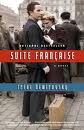
Suite Française by Irène Némirovsky

Suite Française is a posthumously novel published by Irène Némirovsky, a Russian Jew who lived in Paris during the German occupation. It had originally been intended to be a five-part work, modeled after a Beethoven symphony. However, Némirovsky was arrested and deported in 1942 and eventually died at Auschwitz before the work was completed. The work that exists today was found in a suitcase by her daughters Denise and Elizabeth who could not bear to read their mother's words. The novel was eventually published in 2005.

The first part of the novel is "Storm in June" and recounts the massive exodus of Parisians at the time of the German occupation through the eyes and actions people of people trying to flee the city. The Péricands are a wealthy family who have their servants pack all their belongings for them. They will be traveling to Nimes. Gabriel Corté, a writer, is fleeing with his mistress. The Michauds are a couple that work for a Parisian banker. They originally believed that they would be evacuated with the rest of the bank workers, but were left behind when there was no room for them. They were given orders to meet the bankers by a given time. Charles Langelet goes it alone by trying to steal gasoline from unsuspecting motorists. At times comical, poignant and very satiric, this movement of the symphony is allegro.

The second part of the novel is "Dolce" and is told through the eyes of Lucille Angellier whose husband is a prisoner of war. Her disdain for him because of his unfaithfulness leads her down the path of guilt as she must come to grips with her romantic feelings for Bruno, a German soldier who is billeted in the house that she shares with her mother-in-law. Their platonic relationship grows into what will more than likely become a romantic one. Or will it? To complicate matters, a German officer is shot by a local hunter and Lucille is drawn into the situation when asked to harbor the criminal. The novella is the adagio movement, told slowly and serenely. The descriptions are incredibly beautiful with the reader dwelling on each phrase as to breathe in the scene that is being created.

Némirovsky was a devout fan of Tolstoy's War and Peace and also Turgenev and Chekhov. As we think what would have been if she had finished this literary symphony, we can only surmise that it would have been on equal standing with Tolstoy's masterpiece. She was an accomplished writer at the time of her death and we can be thankful that at least we have a portion of her masterly crafted opus magnus.

Wednesday, April 14, 2010

The Secret Supper by Javier Sierra

If you thought The DaVinci Code by Dan Brown, the pick up a copy of The Secret Supper. It is a fascinating account of the painting of the masterpiece by Leonoardo DaVinci on the refectory wall of the convent of the church Santa Maria delle Grazie in Milan, Italy. It is more erudite and less Hollywood-esque than Brown's best seller and gives the reader another perspective in the mystery that surrounds.

Told in flashback by narrator Father Agostino Leyre the novel is set in 1497. The Vatican has been receiving mysterious correspondence from "the Soothsayer." The messages warn that the Catholic Church will in harm's way if DaVinci is allowed to continue to paint. Father Leyre is sent to Milan to investigate the death of the Duchess, one that was foretold before it happened. Was the Duke trying to establish an alternate culture based on the glory of Athens, why were there more murders and how were they connected. It is all for the good Father, whose official title is Master General of the Secretariat of Keys of Bethany, to solve. He has a note, written in Latin, that will hopefully help shed some light on the motives for the murders.

There are numerous subplots to this novel and all the historical people are referenced and mentioned as they are woven into the story. Cathars, Savanarola, The Church of John, and the influence of Mary Magdalene are covered. To read this book is an interesting and captivating journey for those who are fascinated by the life and works of Leonardo as well as the machinations of the Vatican.

Sunday, March 28, 2010

The Hunger Games by Suzanne Collins

I had been wanting to read The Hunger Games since it came out, but had not found it in in any library. I can understand why. To assign it to a genre is not easy. At times it is and adventure, a romance, science fiction and above all, dystopian.

Set in Panem, formerly North America, Collins tells a story of how far reality shows can go. Every year, twenty-four young people, a girl and boy from each of the twelve districts is sent to the Capitol to participate in a fight to the death. Only one will survive the ordeal that is not only televised throughout the country, but is mandatory viewing.

Katniss Everdeen is a sixteen-year-old who lives with her mother and younger sister, Prim(rose) in District Twelve, the Seam, in what appears to be like Appalachia with its dependence on the coal mines for economic survival. "Catnip" as she is called by Gale, an older boy on whom she has a crush, is a savvy hunter and knowledgeable about the woods and survival. On the day of the Reaping when the tributes to the Hunger Games are chosen by lot, it is Prim's name that is called first. Realizing that her sister would never survive the games, Katniss immediately volunteers in her place. She is joined by Peeta, the son of the town baker as the two representatives who will be sent to their sure death in the Capital.

The journey begins as the two travel to the Capitol by train with their mentors HaymitchCinna and Portia. It is up to the stylists to prepare them in an attractive way so that they may be worthy of sponsor money. In an elaborate ceremony all the contestants are presented to the public. It is then that Peeta declares that he has been in love with Katniss since they were five. It was a twist that she never expected, but one that she could exploit as she prepared her survival plan. The next day they would find themselves in the fight of their lives in the "arena," an expansive area of jungles, desserts, lakes, rivers, and wild animals where the Gamemakers control all aspects of the environment.

The novel is incredibly exciting and has enough twists and turns to keep the reader turning page after page. I loved the character of Katniss. She is empathetic, clever, and resourceful. We root for her and Peeta, but realize there can be only one winner and they are the two underdogs to the stronger players like Thresh, Cato, and Foxface.

There are familiar elements here. The scenario of the games reminded of the tributes that the ancient Athenians sent every year to Crete to battle the Minotaur. Katniss and Peeta appear as star-crossed lovers at the mercy of others around them even as Romeo and Juliet did. It was a grand read and I anxio
Abernathy and Effie Trinket, two eccentric personalities. Once at their destination they are escorted to their rooms and meet their stylists, usly await the time when I can get my hands on Catching Fire, the second part of the trilogy.

Tuesday, March 9, 2010

Taken by Kathleen George


It is always exciting to discover a new author. Kathleen George is a professor of Theatre Arts at the University of Pittsburgh from which she also has earned her B.A. and M.F.A. in Creative Writing. I read a review of her newest book, The Odds in Entertainment Weekly and two
things caught my eye - the book got a grade of A- and it was set in Pittsburgh. Upon doing some research about Kathleen George, I found that the detective in the book had also been featured in previous novels. So being the kind of person that I am and having to do things in order, I had to start with Taken.

The novel begins as Marina and Michael Benedict leave a marriage counselor's office. As they go their separate ways Marina connects with a darling baby in a stroller coming from the elevator. As many people do when they see a cute baby, they interact and comment to the mother on how cute the child is. Marina was no different. She was especially touched since she and Michael could not have children. But then as she headed home and got on the bus she saw the baby again. But was it the same child? Of course it was, only this time the baby was in a man's lap - no stroller, no diaper bag. Something was definitely amiss. The man and the baby got off, but Marina could not let it go. Hastily asking the bus driver to stop a block further on the route she retraced the route and attempted to follow the man and baby. Here began the gripping and thrilling tale of how she became involved in a kidnapping and eventual murder scene.

The police are immediately called by the mother of the baby who turns out to be the wife of a young Pittsburgh Pirate pitcher and as a result thrusts the kidnapping into a major news story. Detective Richard Christie begins the investigation into why and how the abduction has occurred. As Kathleen George points out, it couldn't be for ransom money, because the kidnappers would be then be the last people in America who knew how poor the Pittsburgh Pirates were. As the investigation unfolds with all the twists and turns, it keeps the reader turning pages and on the edge of her seat.

The setting moves all around the Pittsburgh area to Erie, West Virginia, and Ohio. Within the city itself we get glimpses of East Braddock, Gateway Towers, and of course Primanti's.

There is tension in the book that is conveyed to the reader - tension between Michael and Marina, between the kidnappers, and between Christie and his wife. All lead to a grand mystery and entangling plot lines. It was a great read - stayed up way to late to finish it - and cannot wait to start the next one.

Sunday, March 7, 2010

Little Heathens: Hard Times and High Spirits on an Iowa Farm During the Great Depression by Mildred Kalish

The March selection for the Flower Library Book Club, Little Heathens...by Mildred Kalish was just a delightful book to read. I was a bit skeptical at first when I ordered the book. Was this going to just be another down and out book about the gloom of living through the Great Depression? I can't imagine what it was like to live during the time that so shaped the spirit of my grandparents, parents, and, really, our country. But what a surprise to read a book with such an upbeat point of view.

Kalish recounts her life in this NY Times top book of 2007 as one of the Little Kids growing up on a farm in Iowa. The book is more than a memoir; it is a prescription on how to live independently and with pity and suffering. The book begins "My childhood came to a virtual halt when I was around five years old. That was when by grandfather banished my father from our lives forever for some transgression that was not to be disclosed to us children...His name was never spoken again in our presence; he just abruptly disappeared from our lives." That beginning would be enough to whet any reader's appetite. But we never read another word about her father. And that is the way life would be for a family brought up with spirit of Independence.

Children were expected to do chores, pitch in with the planting and harvesting and play on their own. If they got a cut or bruise, they didn't immediately run for the attention of their parents, but dealt the best they could. They lived with out electricity, indoor plumbing, cars and mobile phones, and SURVIVED. When you bought something it was meant to last for a while. The phrase, "waste not, want not" really had meaning and it wasn't doom and gloom.

Little Heathens is also a compendium of home remedies and recipes. Kalish was born the same year that my mother was and for this reason I felt as I was reading the book that there was so much that was familiar. I had heard a lot about these remedies, household solutions, and have eaten the meals that were part of the family's repertoire. The beginning of Chapter 11, Farm Food resonates today - after breakfast the first question that was asked is what to have for dinner? My mother did this and I do today. If I haven't made out the week's menu, that is the order of business on my agenda.

I truly enjoyed this book and really wanted more after each chapter. I know I will go back and reread parts of this book. I can actually see it being used as a curriculum related read. It would give great insight into an era that did produce a great generation. It brings us back to the reality of what we need to live - resourcefulness, love, and family.