Showing posts with label World War II. Show all posts

Saturday, July 5, 2025

The Book of Lost Names by Kristen Harmel

There are some books that grab you from the first page on. The Book of Lost Names was that kind of book for me. It was intriguing that the central character, Eva Traube Abrams, was a librarian and the opening of the book was set in the Winter Park, FL library in 2005. She sees an article in the New York Times that takes her back six decades to her life in Paris during the war and a book that had special meaning to her. Otto Kühn, a Berlin librarian, was attempting to return books that had been stolen by the Nazis to their rightful owners. Eva knew that she had to immediately fly to Berlin to try to retrieve it. 

The novel then shifts to her time as a young woman studying at the Sorbonne in 1942 when Paris was under siege by the Germans. She lives with her parents when her father, a Jewish typewriter repair person, is kidnapped by the Nazis, leaving she and her mother, Mamusia, alone. They are warned about the danger of staying in Paris and so with the help of a family friend who shows her how to forge papers, they escape to the countryside and the village of Aurignon in free France. They happen upon a boarding house where Madame Barbier takes them in and gives them advise on being safe. Shortly after Eva goes into a bookstore to purchase pens to help her with the writing she needs to do to forge papers for her father's release. She is introduced to Père Clément, a priest who is also secretly forging papers. Eva becomes part of the resistance and meets Rémy, a very handsome man, who is also part of the resistance and devoted to helping others even if it causes him harm and possible death. In Aurignon, Eva also is reacquainted with Joseph Pelletier with whom she had gone to school in Paris. He would be the perfect husband according to her mother, although Eva is not really attracted to him. He insinuates himself into their lives with the pretense for helping them. As Gérard Faucon, his alias, he becomes involved with another talented forger, Geneviève. 

The novel is consumed with the work the forgers accomplished in providing documents for persons to escape to Switzerland, especially orphans. It becomes a page-turner, when the group is compromised by someone who is leaking information to the Germans. Tragic deaths occur as they are uncovered. The reader has some comfort in knowing that Eva survives at least until 2005.

With the themes of resilience, bravery, love and kindness The Book of Lost Names provides the reader with a few hours of inspired writing. The characters are well-developed and exhibit the full range of human emotions. It is engaging and captures the reader from the get-go. One of the gems that portray the horrors of the Holocaust. 


Tuesday, February 18, 2025

The Nine: The True Story of a Band of Women who Survived the Worst of Nazi Germany by Gwen Strauss

It was somewhat difficult reading Madness and The Nine at the same time. Both nonfiction and both detailing horrific experiences of two groups of people who were made to endure situations that in many cases would destroy the human spirit.

Strauss tells the story of her great aunt, Hélène Podliasky who was part of the French Resistance during World War II and eight others who were arrested for their actions and sent to Ravensbrück Camp in Germany. During the journey there they became a cohesive group. The others in the group were

Suzanne Maudet (Zaza), Nicole Clarence, Madelon Verstijnen (Lon), Guillemette Daendels (Guigui), Renée Lebon Châtenay (Zinka), Joséphine Bordanava (Josée), Jacqueline Aubéry du Boulley (Jacky), and Yvonne Le Guillou (Mena). While on a death march from the camp, the nine decided to escape. Their journey to freedom is the crux of the book.

Strauss through her research of the time and with the survivors of The Nine, presents a book that is nearly unbelievable as to the heroics of these women. Their 10 day journey is told through the eyes of each woman who has her own chapter in the book. It presents a bit of biography and the roles that they each assumed while on their journey. Their goal was to get to the front and cross into the area that was held by the Allies and especially the Americans. With bloody feet, tattered clothing, and a dearth of food, the reader is brought along on the painful journey with them. They struggle to find safe places to rest and German citizens to trust. At times they played into the stereotypical role of women to advance their cause - helpless and ignorant about war.

Strauss also gives insight into how the Nazis treated the prisoners in the camps, babies snatched from mothers while those mothers were raped, slave labor and starvation. It was painful to read.

The nine women formed such a bond that gave them the strength to have hope and survive. It goes without saying that if they had tried to do this alone, none would have made it. They developed strategies for survival, including trading recipes, one of the more upbeat sections of the book.

The book is so well researched with an abundance of footnotes. At times, I had wished for a more linear account, but understood the rationale for Strauss to write the way she did. Another interesting feature was how the author managed to find the women and/or their surviving family members. It was an intriguing, tho painful read.


Monday, October 7, 2024

The Secret Book of Flora Lea by Patti Callahan Henry

The Secret Book of Flora Lea was just the kind of book I needed to take to Physical Therapy. It was engaging and a not too difficult read. In addition, it took place in London and was set at the time of World War II, time and place among my favorites. The novel has two timelines, one in the 1940s and the other in the 1960s.

Hazel and Flora Linden live in the Bloomsbury area of London with their mother. Their father has gone off to fight in the war and was killed in faulty engine fire while in training for the RAF. As the war rages, orders are given to evacuate the children from central London. The two sisters are sent to Binsy, Oxfordshire to be billeted with Bridie Aberdeen, a loving and caring woman who is also a single mother to her son Harry. In order to comfort her sister, Hazel creates stories centered around a fictional place, called Whisperwood. It is their secret and no one else is privy to it. Tragically, one day when Hazel, Flora and Henry are near the river in Oxford, Flora disappears. She was left alone sleeping and when Hazel and Henry come back to the river bank, she is gone. A massive search is conducted and she is presumed to have drowned.

Flash forward to 1960s in London to find Hazel working at a rare book store. For most of her life she has pursued what had actually happened to Flora. It haunts her day and night.  She is taken aback the last day on the job at the book store before she moves on to another job at Sotheby's. In the books for her to process to add to the store's collection, she opens one by an American author entitled Whisperwood and the River of Stars. How could someone know about the secret kingdom. Surely Flora is still alive and somehow the author has heard the story from her. 

She takes the book home with her and shares the story with her boyfriend, Barnaby. Inadvertently a couple of the illustrations get ruined, and her guilt about stealing the book gets the better of her. She decides to return the book, knowing that she could be arrested for stealing it and losing her job. 

The novel then morphs into a mystery about the missing Flora and how Hazel plays detective to find her. It becomes a page-turner, for sure as Hazel revisits all those who may have come in contact with Flora - Bridie, Harry, Kelty, and four nurses who often babysat the girls. She contacts the author of the book, Peggy Andrews, who travels from Cape Cod to London to become part of the adventure.

It is a captivating tribute to the power of storytelling and its magic. Throughout the book Bridie tells stories as does the journalist, Dorothy Bellamy,  who is writing about the children of Operation Pied Piper. those who were evacuated. It is also a novel following your heart and listening to what it sees for your future, especially when it comes to love.


Saturday, May 6, 2023

The Letter by Kathryn Hughes

In this novel, there are a number of different story lines introduced by the author. Any reader knows that at the end they will all converge and it is the how and whys that determine the plot. Switching between 1939, 1973, and present day create the time warp that seems to be so popular, even though this book was written in 2013. Hughes is from Manchester, England and sets her book there. 

Tina Craig has married the love of her life only to find herself in an abusive relationship with her alcoholic husband, Rick. He has lost numerous jobs and although, as so many abusive husbands do, apologizes profusely, and repeats the same scenario. Tina has become the family's means of support and has a weekend job at a charity shop. It is there that she discovers The Letter in a man's suit that piques her interest. She finally has the courage to move out, but after learning that she is pregnant with his child, decides to give him one more chance.

Back to 1939 and the reader is introduced to Billy Stirling, and adopted orphan. He has met the love of his life in Chrissie Skinner, daughter of Dr. Skinner and his midwife wife, Mabel. Dr. Skinner imposes draconian rules on his daughter and is non-apologetic about sending her away to live on a remote farm in Ireland when he learns she has become pregnant. In a Romeo and Juliet kind of chain of events the two do not connect to learn of their love for each other. 

As the two threads of the story evolve, Tina becomes obsessed with finding the origins of the letter which leads her to Ireland where she meets William, who is in search of a birth parent.  From there serendipitous events occur and the reader is able to see the resolution coming into focus. 

There are two very despicable characters in this novel, Rick Craig and Dr. Skinner. Their actions trigger anger and outrage for the reader. They are among the most detested characters I have encountered in my reading. Supporting Tina are good friends Graham and Linda, whom you love, and from whom you wish Tina had taken their advice. They gave her unconditional love. For Chrissie, it was Jackie who became her strength as she struggle in Ireland. 

The Letter was a quick read and for the most part an enjoyable one. It is a bit predictable and one outcome has me a bit puzzled. It would be a spoiler and I will bring it up at our book club in a couple of weeks.


Tuesday, October 13, 2020

The Only Woman in the Room by Marie Benedict

It is always wonderful to read a book that gives you an insight into events or people that you only know on the surface. Such was my knowledge of Hedy Lamarr - she was a glamorous movie star and that was the extent of it. I am appreciative of this fictionalized biography by Benedict to give much more appreciation of the life of a complex and intelligent woman. 

Born Hedwig Kiesler in Vienna, Austria in 1914 to a Jewish father and Catholic mother, she was always intrigued by the theatre and acting. when The Only Woman in the Room, opens, Hedy is finishing a performance of Sissy, a play about Empress Elisabeth of Austria. In the audience was Fritz Mandl who for one reason or another became enamored of her. He asks for her hand in marriage, an action which her father cautiously approves. 

The marriage in which Hedy found herself was a nightmare. Although Mandl was a rich and powerful person in Austria and he lavished gifts and gowns on her and they lived in stately homes and castles, he kept her as a prisoner. She was privy to confidential meetings with the likes of Mussolini and Hitler and at once realized the political leanings of Mandl. She methodically planned an escape, which failed. But she was not easily defeated and eventually managed to flee to London and then the United States. A fortuitous meeting with Louis B. Mayer brings her a contract with MGM and to the movie star with whom we are all familiar. 

As tensions in Europe grow and World War II ensues, she feels for the people that she left behind. Reading of the sinking of the SS City of Benares, she vowed that she needed to make a difference in the world. The steamship was used to evacuate children from Germany to Canada and was sunk by a German torpedo. Remembering the discussions from her days with Fritz Mandl she and pianist, George Antheil developed a device that could potentially jam the radio frequencies that controlled the torpedoes. They were granted the patent, but the Navy refused to adopt it, mainly because of its invention by a woman. It is interesting to note that it was adopted and eventually used during the cold war on U.S. ships. 

The fact that Lamarr was such an inventive and scientifically minded person has been so overlooked is deplorable. Benedict's novel will do a lot to rectify that and also bring to the fore that women can be both beautiful and bright. The ending of the novel brings home the dilemma which she faced

Had I, in the end, become who they already thought I was? To everyone else, I was Hedy Lamarr, only a beautiful face and lissome body. I was never Hedy Kiesler, aspiring inventor, curious thinker, and Jew. Never the self I really was underneath the many roles I’d played on- and off-screen. Or had I used the world’s perception of me as a disguise, a sort of smoke screen to distract them while I achieved my ends? Had I taken the persona to which I’d been relegated and made myself into a weapon against the Third Reich after all, just not the instrument of destruction I’d intended? I wondered if it even mattered what—or who—they thought I was, if I’d gotten my revenge against the European suppressors by funding the Allies tonight and perhaps, along with it, the redemption I’d sought. I had always been alone under my mask, the only woman in the room.

A thoroughly enjoyable read and an appreciation of a woman whose place in history should be recognized for her contributions beyond the acting world. 


Saturday, August 29, 2020

The Paris Architect by Charles Belfoure

There are not too many books dealing with World War II and German doings that I do not enjoy. The Paris Architect was no exception. A number of subplots and character development made the novel an enjoyable and interesting read. 

The opening of the novel provides just the shock value to entice the reader to read on. A man witnesses the cold-blooded murder of a Jewish man by Nazi soldiers as he is on his way to a business meeting. 

Lucien Bernard is an architect, living in Paris during the German Occupation with his wife Celeste. The two are merely going through the motions of a marriage as both are involved with other people. He is approached by an industrialist, Manet to aid in the hiding of Parisian Jews. His first reaction is to turn down the offer, but the idea of a lucrative reward for the job spurs him to take it. He has a very creative mind and finds after a couple of successful jobs of allowing Jewish people to avoid being discovered by the Nazis, that he actually enjoys thwarting the German soldiers. 

His affair with Adele seems to be crumbling and he finds himself at a loss until Manet connects him a member of the Wehrmacht who employs Lucien to design munitions factories, which he agrees to do, although hie is accused by his wife on her departure from the home as a collaborator. Therein lies a conflict as Lucien knows that he is helping the Germans, but is convinced that the French will be able to use the factories after the war. 

His world is shattered when he witnesses the death of a couple whom he believed to have hidden safely, his office is infiltrated by an intern whose uncle is connected, Adele sleeping with a Nazi officer. Belfoure builds the suspense as Bernard tries to walk a tightrope between his loyalty to France and keeping the Nazis at bay. 

There are some very poignant scenes in The Paris Architect when a young Pierre enters his life and an affair with Adele's employee, Bette, commences. The novel builds to a conclusion, that until the last page the reader is kept on edge.

Belfoure includes a wonderful map of Paris with all the streets that are mentioned in the book referenced. The book is beautifully written and would entice me to read another one of his books. 

Monday, April 6, 2020

Warlight by Michael Ondaatje

In one of the most complex books that I have read, Warlight is the latest of Ondaatje's novels. I had looked forward to reading it from the time Pittsburgh Arts and Lectures announced Ondaatje was the speaker for the last 2020 lecture. Its subject matter concerned two of my favorite topics - World War II and London. 

Narrated by Nathaniel, the book opens with the statement:
“In 1945 our parents went away and left us in the care of two men who may have been criminals” 
It snags the reader in what would seemingly be a tome of young children and their existence in the post war London years. But it, like a good part of the book, is merely a fragment of a puzzle that poses a challenge for those who try to piece it together. When Nathaniel (age 14) and his sister, Rachel (age 16), are left by their parents, to go to live in Singapore where the father has been promoted to run a Unilever office. Their mother, Rose, entrusts their keeping to a friend, Walter, whom the children name The Moth because he is so quiet. With The Moth running some shady business, the children are virtually left on their own. The first half of the novel relates their lives there as they meet and interact with other adults who comprise The Moth's group of acquaintances, including the Pimlico Darter (Norman) and Olive Lawrence who is an ecologist and ethnographer. Despite some criminal leanings The Darter becomes a surrogate guardian to Nathaniel as they smuggle dogs into London for illegal racing as does The Moth to Rachel. The two grow up quickly as they experience life in London, all the time wondering where there mother has gone. Nathaniel works for The Moth at the Criterion, a banquet hall where he meets Agnes, named for the street where she lived and who is first sexual experience. When a kidnap attempt is made on the two children, the realization that there is something more to the disappearance of Rose. 

In the second part of the book, Nathaniel, now a grown man, reflects on those years, his mother's whereabouts, and the covert activities that kept her at a distance from her children. Working at the British Classified Archives, he discovers documents that help him discover what Rose's part was. Ondaatje reveals bits and pieces of that action to the reader over the course of the second half chapters. There are clues and innuendoes that need to be assembled before a clear vision of Rose's life is understood. A seemingly unimportant incident of a thatcher falling from the roof of Rose's parents home escalates into a critical time in her life. 

Warlight references the light that, even tho dimmed, guided emergency traffic in London during World War II. But it also takes on an added meaning of the secrecy and shrouded surreptitiousness of espionage, smuggling, codenames, and interrogations. This is not a book for the faint of heart, but for those who appreciate the complexities of a nuanced novel that reveals its own secrets in measured increments.   

Tuesday, August 8, 2017

The Race for Paris by Meg Waite Clayton

I first heard of The Race for Paris when Margaret Atwood mentioned that she was reading it. It was also the perfect book to pick up as we left France and Normandy in July. 

The book is a work of fiction, but with the quotes and references to real-life female journalists and photographers who covered WWII, it reads like a personal account or memoir. After the invasion of Normandy on 6 June 1944, the allied armies set about to liberate the French countryside towns on their way to the liberation of Paris. 

The novel's three main characters are Jane Tyler, Liv Harper, and Fletcher Roebuck. Jane is a reporter from the Nashville Banner, Liv, a photographer who is married to Charles, editor of The New York Daily Press, and Fletcher who is a credentialed war photographer. The three team up to be the first in Paris to report the ultimate liberation. Although Jane narrates the novel, it is really Liv's book and a tribute to her. 

Female journalists were often under undue regulations as they attempted to cover the war. Liv requested a jeep to go to the front, was denied by a commanding officer, and so convinces Jane to go AWOL from her position at a hospital. They meet up with Fletcher whom they convince to accompany them on their quest. What ensues is a action filled account of their goal of reaching Paris. 

The three not only have to avoid being discovered for fear of being sent back to their homes, but also to avoid the German defenses and bombs. As they journey through the small towns, finding places to sleep and rations to eat, the reader senses a commitment to the cause, but also to each other among the three. The book is a tribute to the courage of those who covered the war, but especially the woman who faced event greater hardships. Witnessing a childbirth in a cave where a group of Jewish people were hiding was so poignant, disturbing, and revealing more than anyone could imagine. I was angered by the fact that the male correspondents were handed virtually everything, but the women were denied so much - to the extent that Liv could not submit her photos with her name. 

There is also a bit of romance that is written into the account. It develops as a triangle between Liv and Fletcher and Jane and added to the angst of the harrowing war scenes. But as the book draws to a conclusion, it seems to be a natural progression.  Liv's husband's conduct disturbed me very much. Encouraging her to take on the job of covering the war, he then seems to undermine her work by starting rumors, having multiple affairs, and underhandedly trying to have MPs arrest her.

In addition to the story that it tells The Race For Paris is a tribute to those women who covered the war. Interspersed in the story are quotes by and references to Ruth Cowan, Margaret Bourke-White, Iris Carpenter, Martha Gellhorn,  Lee Miller, and Dickey Chapelle. Also figuring prominently in the book was Ernie Pyle.

This was a very enlightening book and one where the words on the page conjured pictures in my imagination that I saw from having visited some of the towns referenced. It was a great read as a culmination to our French journey.

Monday, April 24, 2017

The Zookeeper's Wife by Diane Ackerman

The Zookeeeper's Wife has been on my "want to read" list since its publication in 2007, just 10 years ago! It moved up the list to "currently reading" spurred by a Kindle Deal of the Day ($1.99) and the release of the movie based on it. I am glad that I did wait to read it until we had visited Poland. Having a picture of Warsaw in my mind allowed me to visualize the landmarks that were described and referenced. 

The zookeeper in this nonfiction book is Jan Żabiński and his wife is Antonina. The zoo in Warsaw was well renowned before World War II and Żabiński a well respected curator and as the Nazis moved in, Lutz Heck, the zoologist of the Berlin zoo, started pillaging the Warsaw zoo. He stole valuable animals and what he didn't steal he killed. The discovery of Kasia, a favorite elephant, dead in her enclosure was startling and a shocking beginning to the horrors that would follow. But the Żabińskis had a different plan in mind. Jan was also a professor in the underground and secret Warsaw University. With access to the Warsaw ghetto he was able to smuggle Jews out and hide them in the secret passages, cages, and tunnels of the zoo. Perhaps he was not suspected as carrying out these heroic deeds due to the fact that he was able to turn the zoo into a pig farm.

Once Jan got the "guests" to the zoo, it was then up to Antonina to take care of them. She never considered herself a heroine, but because of her efforts in hiding and feeding them she managed to save over 300 Jewish men, women, and children. She put herself and her children in danger as the Nazis became intent upon arresting those who were suspected of hiding the Jews. One of the clever ruses was when Antonina played an Offenbach tune with the refrain “Go, go, go to Crete” it was code to her “guests” to hide as Germans were around. To complicate matters Antonina was pregnant and required bed rest before giving birth to her daughter Teresa. During the Warsaw Ghetto Uprising Jan goes off to fight with the resistance and Antonina takes the children to a small village to avoid the decimation of the city. She desperately tries everything in her power to learn of Jan's fate. And when she does, it is not good. He was shot through the neck, but miraculously recovers.

After the war they reopened the zoo, but under the Communist regime it was just not the same. The theme of kindness, caring, and compassion resonates through this book. It is so hard to imagine what it must have been like to live during this horrific genocide. Even walking the streets of Warsaw today, the destruction is unimaginable. If there is such an entity as an enjoyable book about the Holocaust, this would be one. The spirit of the Żabińskis is so deep and caring that sets a high bar for us all. Would we have been able to accomplish what they did and with the courage that they showed. I am intrigued to read more about the Żabińskis. Ackerman relied on Antonina's diary for a lot of the book. That would be well worth searching out and reading a first hand account. It will be interesting to see how the movie portrays their lives, the Nazis, and the ghetto. I have a feeling  I may be disappointed after reading the book.

Friday, April 29, 2016

The Nightingale by Kristin Hannah

I had really wanted to read this book and was disappointed when I wasn't going to be able to attend our neighborhood book group when we were going to discuss this. I tend to read my own selections when this happens. But, then, the date was changed and I ordered the book for my Kindle and got to reading. What an incredible read - an historical lesson, a page turner and tearjerker all rolled into one remarkable book.

The Nightingale begins with an elderly woman, about ready to move into an assisted living facility, going through some memorabilia in a trunk in her attic. The reader is told of an old passport that obviously has had some disturbing memories tied to it. The in flashback, the novel begins its story of two diametrically different sisters who live in rural France during the Nazi occupation of the country. Vianne lives on the family homestead, Le Jardin, while Isabelle is being disciplined at a boarding school for showing her defiant and rebellious attitude.  The sisters' mother died when they were young leaving their father to try to cope with raising the two girls. He couldn't cope with this and virtually left the girls to fend for themselves. Vianne marries the postmaster, Antoine,  the village in the Loire Valley and has a daughter, Sophia. Their life is then torn apart when Antoine goes off to war and Vianne is left to maintain the house, teach in the local school, and raise Sophia.  Add to this the arrival of Isabelle, who has been sent by their father when he shuns her living with him in Paris.

As the novel unfolds the horrific crimes of the time are revealed without sugar-coating the events or feelings of the time. Vianne's home is requisitioned by a Wehrmark officer and he billets there. Isabelle joins the resistance movement and guides downed airmen over the Pyrenees to Spain and safety. Jewish friends of the family disappear overnight and children are left as orphans. The result of this is a heart-wrenching story of a time that was filled with calculated torture, persecution, and lack of compassion for the human race.

Kristen Hannah has given her readers a novel that takes twists and turns and will, ultimately, keep the reader not wanting the book to end. A definite must read that will stay with her readers long after the book is closed.

Monday, March 28, 2016

All the Light We Cannot See by Anthony Doerr

Sitting on the top of the NY Times Best Sellers List for the last two years is the complex novel of wartime France and Germany. But All the Light We Cannot See is so much more than that. It has been sitting on my bookshelf since its publication and the impetus to read it now comes from the lecture to be held 4 April 2016 as part of the Ten Literary Evenings of the Pittsburgh Arts and Lecture series.

The basic premise (if there can be such a concept) of Doerr's work is the parallel lives of two young adults during the ending days of World War II. Werner Pfennig is an orphan who has an incredible gift for understanding, building, and using radio transmissions. Living in the Zollverein section of Germany, he found an old radio that he repaired and on which he and his sister, Jutta, listened to broadcasts from France. He is selected to attend a "prestigious" technical school where he will hone his skills and be trained for military maneuver and tracking the resistance movement. He is stationed in Germany, Russia and, finally, Saint Malo.

Marie Laure LeBlanc, blind since the age of six, lives in Paris with her father, Daniel, who is the locksmith at the Museum of Natural History.  Her father is a loving and doting person. He builds a model of the neighborhood in which they live that includes every drainpipe, house, and even manhole covers so that Marie Laure can have some independence when she is out of their residence. As the Germans occupy Paris, the two flee to the countryside, described by Doerr in haunting and realistic narrative. Entrusted to Daniel is the extremely valuable "Sea of Flames" diamond, the possession of which held a curse and a promise. It was so precious that other models have been made to divert any treasure seekers, such as the nefarious Reinhold von Rumpel.  They finally reach the Britanny coast town of Saint Malo and the home of her great uncle, Etienne and his housekeeper, Madame Manec. There again Daniel builds a model of the area surrounding Etienne's house. The house holds many secrets including many radio transmitters, a false backed wardrobe and the mysterious activities of the agoraphobic Etienne. The model that Daniel constructs holds these secrets and even more.

The story that unfolds in these two different worlds is gripping and compelling. The will to survive, overcoming fear and the presence of life are underlying themes. It would be impossible to count the number of times light or the absence of it was referenced in the book. Perhaps the most powerful  quote is uttered by the French radio broadcaster: "Open your eyes and see what you can with them before they close forever." Doerr utilizes a complex narrative style as he alternates focusing on Werner and Marie Laure and moving back and forth in time. The reader knows that the two lives will cross paths, but is not sure whether the intersection will be as good and evil or as another encounter. The conclusion of the book is intricate as it intertwines the lives of the characters in a time far distant from the original period of the novel. I am intrigued by Saint Malo and would love to visit the city. Although complex, the chapters are short, manageable and conducive to a emotional and wondrous read.


Thursday, December 18, 2014

Winter of the World by Ken Follett

The second part of Follett's Century Trilogy, Winter of the World, continues the saga begun in Fall of Giants. It didn't take nearly as long to read this book as the last. The novel begins in 1933 as Germany is struggling with the rise to power of Hitler, fascism, and economical distress. England is dealing with much the same issues and the United States is trying hard to avoid another international conflict.

It would be impossible to summarize this book of over 950 pages. Follett again centers his novel on the families of Fall of Giants with the children of the significant characters becoming the protagonists. They are there at the center of the action, but also give voice to the philosophic ideas of the time leading up to World War II and when they are living out parts of that tortuous time in the history of the world. Paramount among those are Daisy Peshkov who marries into British political royalty, but who loves another, Woody and Chuck Dewer, sons of a powerful American senator, Carla Von Ulrich, a young German girl who dares to challenge Hitler's policies, and Russian spy Volodya Peshkov. It is around their stories and the historical events that the novel turns. 

Although the book continues through to the end of the war, there are a few seminal scenes that will stay with the reader long after the book is finished.  One will never forget when the Carla finds evidence of Hitler's killing of the infirm and mentally challenged children. It is painful to read and the reader is as outraged as she is. Would any of us have had the courage to do what she did. The bombing of Pearl Harbor is described in such detail that you can hear and feel the bombs falling and see the planes above. It is tragic for not only for our nation, but also for those characters who were in close proximity. And then there is the crushing London blitz, the plan to invade France and the landing on Normandy Beaches. The Battle of Midway is portrayed as a real turning point in the war and where the code breakers managed to outwit the Japanese. We can detest Stalin as much today as many of his contemporaries did. Follett's roots as an espionage and writer of spy fiction shine through as he focuses on Russians gathering intelligence on the development and production of nuclear bomb.

The book is a compelling read and this reader is anxious to have a block of time to be able to read the next installment in the trilogy, The Edge of Eternity.


Thursday, November 13, 2014

Brideshead Revisited by Evelyn Waugh

Once a year The Gables Book Club reads a piece of classic literature. For this year's offing, Brideshead Revisited was chosen. Originally published in 1945, it has also been the subject of at least two film/tv iterations. I enjoy revisiting the classic literature that I may have missed or that I read as an adolescent and did not appreciate. Evelyn Waugh's novel of the adult life of Charles Ryder as he struggles to find himself and his place in the world. From a beginning prologue to the body of the book and then the epilogue, the reader wrestles with Ryder and Waugh for truths to be told.

The reader first meets Ryder as he is pulling up one camp during WWII and traveling to another outpost in England. Upon arrival, he knows the estate and the sight of Brideshead catapults him into a memoir of his time spent their as a youth. Charles was raised by his father in London after his mother died. His father seems indifferent and almost eccentric, spending very little time with Charles. Charles goes off to Oxford University where he meets Sebastian Flyte, the son of the Lord Marchmain who owns the palatial estate. They become best of friends and more importantly, drinking buddies. During the summer term, Charles spends time at Brideshead and meets the other members of the family: Lord Bridey, Julia, and Cordelia, the siblings of Sebastian and his mother Lady Marchmain.

The story that ensues details his relationships, his beliefs, and his life's journey from Oxford to his revisiting Brideshead in 1944. As with many classic pieces of literature the themes on which the author focuses are well delineated and presented. Brideshead Revisited has no dearth of such themes. With Evelyn Waugh, the reader must remember his roots as a satirist as the exploration of those themes ensues. Noteworthy are his treatments of alcoholism and the acceptance of it by the aristocracy in Post WWI England and a heavy handed examination of the Roman Catholic dogma and church. Each member of the Flyte family exhibits a different commitment to his or her faith and as such embodies Waughs struggle with his own beliefs.

Another characteristic that stands out in classic literature is the richeness of the language. I don't know if we as readers in 2012 are less intelligent or lazier than those in 1945, but to read a novel that is so infused with beautiful language is so refreshing. Page after page the reader is treated to a feast of words that flow with richness that is a characteristic of the past. 

Brideshead Revisited is worthy of a read or a re-read. It's provocative, probing, and profound.

Sunday, March 2, 2014

The Light in the Ruins by Chris Bohjalian

Alternating between 1943 and 1955, Bohjalian crafts a mystery, historical fiction and psychological thriller in his book, The Light in the Ruins. Interspersed with those chapters is a narrator's viewpoint on the murders he has committed and is about to commit. 

Outside of Florence, there is, what once was a bucolic Tuscan villa - Villa Chimera. Owned by the Marchese and Marchesa Rosati, it is a sanctuary for their family from the horrific brutality of the war. Living with Antonio and Beatrice is their daughter, Christina, and daughter-in-law Francesca and her two children Their son, Vittore works in Florence at the Uffizi and their other son, Marco, Francesca's husband is serving in the Italian army. Life in the villa changes drastically one day when Nazi soldiers arrive wanting to see the caves of earlier Etruscan burial grounds. The soldiers subsequently occupy the villa for an outpost and Christina becomes romantically involved with one

In 1955 Serafina Bettini is working as a homicide detective in Florence when she is called to investigate the chilling murder of Francesca Rosati. The body is discovered in her apartment with her heart cut out. As the investigation continues, the reader begins to learn more about Serafina and her involvement in the war. She has suffered brutal wounds that have left her scarred and without a portion of her ear. 

As the narrative moves back and forth between the time periods and through flashbacks in the minds of the main characters, the connections between the characters begin to be elucidated. The serial killer's narration reveals that his/her revenge will be taken on the Rosatis, one by one.

The Light in the Ruins is another example of the masterful and powerful storytelling of Chris Bohjalian. It is gruesome, to be sure, but is also a gripping chronicle of the war in Italy. The struggle between citizens, the Partisans, and the Nazis shows the multi-faceted effects of a conflict. How does one balance doing what is right when it comes to saving one's family? Its strength lies in historical and political analysis. The revelation of the serial killer is a bit of a shock with so many possibilities - a man, woman, Italian, Nazi, an acquaintance or one who needs to exact revenge on the rich landholders?  The meaning behind the title of the book is illuminated at the end, much as the dock light in Gatsby does for that novel.  Bohjalian needs to be on the list of "must read" authors.

Tuesday, January 24, 2012

Winter Gardedn by Kristin Hannah

The cover image of Kristin Hannah's Winter Garden mirrors the chill inside the book. It is a chill that permeates the weather, but also relationships. But, yet, there is a butterfly that foretells the coming of a time of warmth.

Anya is the aloof mother of Nina and Meredith, daughters who have taken different paths in life. Nina is the adventurer, the National Geographic photojournalist who has traveled the world and chronicled wars and famines. Although involved with Danny, she has not and does not want to put down roots. Meredith, on the other hand, married young, has two daughters, and has stayed close to home helping to run the family orchard business. They converge at the bedside of their beloved father when he has had a severe stroke and is near death. He is the glue that has held the family together and his last wish is for his daughters to get to know and love their mother, something that has not been possible for the girls despite their trying.  "Make her tell you the story of the peasant girl and the prince," their beloved father had said. "All of it this time."

As they were growing up the girls were treated to fairy tales told by their mother. They took place in Russia, her home before coming to the U.S. Beyond that they knew very little of their mother's life. In fact, it is only at the end of the book that they actually find out when Anya's birthday is. Struggling to hold their lives together after their father's death, Meredith and Nina must make sense of their mother's dementia (or is it just grief), their personal lives, and the emptiness that surrounds them.  It is through the fairy tale of the peasant girl and he prince that the reader and the girls learn the reason that Anya has lived in the cold shell of the Winter Garden. 

This book was slow to engage me. At the beginning I was very impatient with the direction the story was taking as well as the prolonged narration of the story within the story. As it became more clear as to the purpose of Anya's tale, I was taken in. The siege of Leningrad and the plight of the Russian people is heartbreaking. Man's inhumanity has played out in so many venues and time periods, but the conditions in Russia during this time were more than appalling. (Very reminiscent although from a different perspective of Bohjalian's Skeletons at the Feast.) As the sisters begin to understand their mother they know what they must do to crack the ice that stands in the way of unconditional love and acceptance. A trip to Alaska, a visit to a professor who has written a treatise on the Siege, and a chance meeting in a coffee shop, and a powerful resolution give explanation for Anya's actions.

I cannot understand ( I don't have that perspective) of how a woman can be so affected that she is not able to love her children with all her heart and soul, even with the horrific experience that is her life. That part of the novel just doesn't ring true to me. The strength of the novel is in Kristin Hannah's description. The settings as diverse as an orchard in Washington, a homestead filled with memories, a Russian city under siege, the beauty of Alaska are masterfully penned. Again, this is a book I would probably not have read if it had not been a book discussion selection.


Wednesday, October 12, 2011

In the Garden of Beasts by Erik Larson

In the Garden of Beasts was the October Selection for The Gables book group. Ironically, I had purchased this the day before I got the reading list for the year. I was excited that I was going to read a book that was actually on my "To Be Read" list. Larson has extensively researched (nearly 30 pages of references and citations) the tenure of William Dodd as U.S. ambassador to Germany during the rise of Hitler and Nazism.

This is the first Larson book that I have read and I found the writing to be interesting, engaging, and thought-provoking. William
Dodd was a learned professor at the University of Chicago. His interest was southern history and he was in the midst of completing a major treatise on the south when tapped to be the U.S. ambassador. He had studied in Leipzig, was fluent in German, a liberal, and seemed to fit the bill when no one could be found to take the position. He was given two hours by President Roosevelt to accept or refuse the post after it was offered. Upon his acceptance he moved his family: wife Mattie, son Bill and daughter Martha to Berlin. He was an atypical ambassador in that he didn't have a lot of money and he lived and acted frugally. As such he did little to ingratiate himself into the German diplomatic circles and was often the brunt of their jokes.

Maybe naivete is too strong of a word, but
Dodd really did not find the situation in Germany as alarming as it looks from the 21st century upon his arrival in Berlin. Despite the fact Jews and American Jews were being attacked and murdered, he seemed powerless to bring the urgency of the situation to Roosevelt or the German government. In reality, he believed as did most Americans that Hitler would lose his power base and fall from the leadership ranks. In the four years that the book covers the reader through Larson watches this belief change to one that reflects the urgency and abomination of the situation. He spoke out vehemently on one occasion, saying,
“You cannot expect world opinion of your conduct to moderate so long as eminent leaders like Hitler and Goebbels announce from platforms, as in Nuremberg, that all Jews must be wiped off the earth.”
In the Garden of Beasts chronicles not only William Dodd's life and work, but also that of his daughter, Martha's. In fact, she is almost the focus of the book. Martha was, to say the least, socially motivated and promiscuous. As a literary agent in Chicago, she was a very close friend of Carl Sandburg and Thornton Wilder. Later she added Thomas Wolfe to her conquests. As a resident of Berlin, she was enamored of the Nazi movement and counted a number of them as suitors, including Rudolf Diels, the first head of the Gestapo. But it is with Boris Vinogradov, an NKVD (Russian Secret Police) agent that she continues a prolonged love affair. Could it be that he is interested in her for the access to information that she has? Martha's story is intriguing and disturbing. She returns with her family and without Boris to the U.S. when Dodd resigns his post, but continues her intelligence collecting and eventually flees the country with her husband, Andrew Stern, when they are investigated as moles and communists.

It is easy to see why
In the Garden of Beasts rose quickly to the top of the NY Times best seller list. It is nonfiction, but reads like fiction. It gives insight, heretofore unchronicled, into the life of an ambassador in the most troubling time of a century. Larson investigates all the German hierarchy of the Third Reich and the reader can't help but be fascinated by some of their private lives. But more than that it is the life story of a down to earth family man who is trying to do what he can to preserve peace among nations and peoples. Don't miss this one.

Tuesday, January 18, 2011

Moon Over Manifest by Clare Vanderpool

The Newbery Committee of the American Library Association once again surprised the library community by choosing Clare Vanderpool's debut novel Moon over Manifest as its 2011 winner. Set in Manifest, Kansas, the story takes place in 1936 during the Great Depression with flashbacks to 1918 and World War I.

We meet Abilene Tucker as arrives in Manifest by jumping off the train because it's "best to get a look at a place before it gets a look at you." She's come to stay with Shady Howard, a sometime pastor, salon owner, and bootlegger. Her father, Gideon, has taken a job on the railroad in Iowa and it wasn't appropriate for her to accompany him. Abilene is a spunky girl used to hopping trains and living without too many comforts. She arrives in Manifest the day before school is out for the summer. She meets Lettie and Ruthanne and the 3 become good friends.

Abilene discovers a little tin of momentoes in her room at Shady's. Each has an important significance in the life of the towns' people and indirectly or directly Abilene's life. The stories, told in flashback to 1918, are woven by Miss Sadie, a diviner. She is quite the character who knows the history of the town inside and out. Each time and place has its own story, mystery and excitement. I wondered if the young audience for whom the book was written would be able to follow the switching back and forth. Throughout the novel the parade of memorable characters make appearances from Sister Redempta, nun and teacher to Hattie Mae Harper, journalist and historian. Abilene must sort out the stories as she and Lettie and Ruthanne try to find a spy, understand who Jinx and Ned are, and why Abilene's father has left her. It was helpful to have a listing of the characters at the beginning of the novel.

This novel reminded me so much of others I have read:
A Long Way from Chicago by Richard Peck, The Higher Power of Lucky by Susan Patron, Nowhere to Call Home by Cynthia DeFelice, and Because of Winn Dixie by Kate DiCamillo. This is a solid piece of historical fiction, though not groundbreaking. I liked the book, but did not love it. It would appeal to both boys and girls, but I think a hard sell on its own. Perhaps it is best shared by teacher reading it to his or her class.

Friday, November 5, 2010

Skeletons at the Feast by Chris Bohjalian

So I took a break from Fall of Giants' 985 pages to read the November selection for the Flower Memorial Library Book Club. Chris Bohjalian's Skeletons at the Feast was a quick read, but not an easy one. Taking place at the end of World War II, it is a chronicle of the horrors and atrocities of war. Bohjalian was given a diary that belonged to a friend's East Prussian grandmother, Eva Henatsch, kept from 1920 through 1945. The novel was as absorbing as it was horrific. I was thankful that there were sections that lightheartedly broke through the darkness.

Skeletons at the Feast is a novel with 3 concurrent story lines. Taking place as World War II is drawing to a close, men, women, and children from Prussia are streaming to the west as refugees trying to escape from the Russian army. We first meet the Emmerichs, a well-to-do family who own a beet farm. Mutti and Rolf, parents to Werner, twins Anna and Helmut, and Theo. Their home, Kaminheim, is well-appointed and comfortable. Mutti is a strong supporter of Hitler and has a portrait of him hanging in the parlor. They have received help in working the land from British POWs, one of whom, Callum Finella, has fallen in love with Anna. As the family is poised to leave their beloved home for the west, Helmut and his father join up with the German army to fight in a counteroffensive mission. Werner has already left and with no word of him in months, he is presumed to be dead. Mutti, Theo, and Anna continue on with the carts full of possessions and their horses leading them. Callum goes too, often hidden under the grain and oats.

Uri Singer is a Jew, separated from his family, as the Nazis took Jews as prisoners. He finds himself on a train to Auschwitz and realizes what will happen there, tho most of the transported prisoners have no clue. He throws himself from the train, eludes the guards and eventually assumes the identity of Manfred, a Wehrmacht officer. As time passes and he struggles to reach the west and the American and British lines, he meets with the Emmerichs and joins them in their flight. He searches for his sister Rebekah and is determined to undermine at any point the German army.

The third element of the story is the plight of French refugees, namely Cecile. Cecile is a privileged young woman who show incredible character and resilience. She and others whom she meets are moved from work camp to work camp as the fighting grows closer. Through her and her friends Leah and Jeanne we gain another insight into the atrocities that were committed in this war.

Bohjalian masterfully weaves all these stories together and creates a strong and compelling narrative. His descriptions of the march, the horrendous conditions during the winter months, and the morally corrupt Red Army are vividly portrayed. At times it is painful to read. His strong craft, tho, is his character development. Each person in this novel brings a point of view that allows the reader a glimpse at this war through many different lenses. All together they present a pictures that are disturbing and yet enlightening. The romance and true love between Callum and Anna, the acceptance of Uri (Manfred) by Mutti, her realization of what the Nazis were actually doing, and the sheer courage of all remind us that we are sometimes human beings that cannot always control what goes on around us, but we can, at least, carve some of our own personal destiny. Human beings when allowed to be just that without superficial barriers, can and will find a way to survive even in the most atrocious situations.

This was an inspirational and incredible read.


Wednesday, August 11, 2010

The Postmistress by Sarah Blake

The novel opens with the question, "What would you think of a postmistress who chose not to deliver the mail?" It is question that engages the reader and gives pause for thought. At first I was incensed that someone would do this, but then I realized that there must be a reasonable back story. Set in the small village of Franklin on Cape Cod, London and other venues in Europe, The Postmistress is the story of Frankie Bard, a reporter who works with Edward R. Murrow in London, Emma Fitch, newly wed wife of Franklin's doctor, and Iris James, the postmistress and how their lives become intertwined.

The strength of the novel is in the character development, the way Blake creates independent individuals who are also products of their time. I can picture Iris in her uniform carefully sorting and delivering mail. How is it that she didn't carry out her duty? Emma is so quiet, so innocent. She keeps to herself after Will has gone to London to regain the confidence and put off the guilt he feels after a devastating tragedy. She endures the day to day life opening herself to few who look to support her. Frankie is adventurous and outspoken. Her radio broadcasts are filled with human interest at the same time urging those to listen and be aware of the world situation even though a listener might not be directly affected. Her call to action against the Germans falls, for the most part, on deaf ears. As she travels throughout Germany, France, and Spain she interviews and records voices of refugees and Jews who are being forced to relocate. Their stories are deeply touching, but we still turned away from help.

There is also a quiet to the book, a poignancy that allows the reader to contemplate the action that happens. Whether it is Iris dealing with a moral dilemma, Emma waiting for letters from Will or Frankie comforting a young child, the reader is deeply affected. As the seasons and pages turned, the realization that war is horrible on so many fronts stands out to the reader and becomes the real message of the book.

Saturday, May 8, 2010

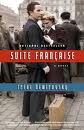
Suite Française by Irène Némirovsky

Suite Française is a posthumously novel published by Irène Némirovsky, a Russian Jew who lived in Paris during the German occupation. It had originally been intended to be a five-part work, modeled after a Beethoven symphony. However, Némirovsky was arrested and deported in 1942 and eventually died at Auschwitz before the work was completed. The work that exists today was found in a suitcase by her daughters Denise and Elizabeth who could not bear to read their mother's words. The novel was eventually published in 2005.

The first part of the novel is "Storm in June" and recounts the massive exodus of Parisians at the time of the German occupation through the eyes and actions people of people trying to flee the city. The Péricands are a wealthy family who have their servants pack all their belongings for them. They will be traveling to Nimes. Gabriel Corté, a writer, is fleeing with his mistress. The Michauds are a couple that work for a Parisian banker. They originally believed that they would be evacuated with the rest of the bank workers, but were left behind when there was no room for them. They were given orders to meet the bankers by a given time. Charles Langelet goes it alone by trying to steal gasoline from unsuspecting motorists. At times comical, poignant and very satiric, this movement of the symphony is allegro.

The second part of the novel is "Dolce" and is told through the eyes of Lucille Angellier whose husband is a prisoner of war. Her disdain for him because of his unfaithfulness leads her down the path of guilt as she must come to grips with her romantic feelings for Bruno, a German soldier who is billeted in the house that she shares with her mother-in-law. Their platonic relationship grows into what will more than likely become a romantic one. Or will it? To complicate matters, a German officer is shot by a local hunter and Lucille is drawn into the situation when asked to harbor the criminal. The novella is the adagio movement, told slowly and serenely. The descriptions are incredibly beautiful with the reader dwelling on each phrase as to breathe in the scene that is being created.

Némirovsky was a devout fan of Tolstoy's War and Peace and also Turgenev and Chekhov. As we think what would have been if she had finished this literary symphony, we can only surmise that it would have been on equal standing with Tolstoy's masterpiece. She was an accomplished writer at the time of her death and we can be thankful that at least we have a portion of her masterly crafted opus magnus.