Monday, May 17, 2010

The Shadow of Her Smile by Mary Higgins Clark

If it is April, it must be that Mary Higgins Clark has a new book. The latest from the popular mystery writer is The Shadow of Her Smile. As is usually the case, the novel concerns itself with a larger issue than the murder mystery. In this book, beatification of a former nun serves as the background for the story.

Olivia Morrow, an octogenarian, has been told that she has very little time left to live by her doctor. She is in possession of papers that contain a family secret about her cousin, Catherine, a nun, who because of her ability to heal those suffering from a terminal disease, is in the final stages of the beatification process. While in her teens Catherine gave birth in Ireland to a boy who was given up for adoption. Olivia is conflicted as to whether to divulge the secret or take it to the grave with her.

Monica Farrell is a pediatrician at a small hospital in New York who has treated a small boy with brain cancer who was miraculously cured. She is also very active in trying to secure a grant for her hospital from the Gannon foundation so that the pediatric unit could be expanded and become state of the art. As the novel begins Dr. Farrell is treating a Sally, a toddler for asthma and pneumonia. Sally's mother, Reneé Carter, is mysteriously absent and is being cared for by a nanny. Monica is also celebrating the miraculous remission of Carlos Garcia's leukemia.

As is typical of Mary Higgins Clark's books, the numerous characters - Monica, Olivia, Dr. Clayton Hadley, Alex Gannon, Greg Gannon, Reneé Carter, Tony Garcia, and Ryan Jenner are all interconnected. Tony Garcia drives Olivia Morrow to the cemetery where Catherine is buried and proves to be the fulcrum on which the novel hinges.

There are the perfunctory murders, blackmail, and stalking. This is not one of MHC's best efforts. It was fairly easy to solve and not much of a thriller. It did keep my interest and was a good light read after Suite Français. The topic of beatification and medical miracles was an interesting subplot and one that provokes some extended attention. I will await next April's publication with the hope that Clark can regain the skill with which she used to write the involved and complicated novel.

Saturday, May 8, 2010

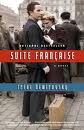
Suite Française by Irène Némirovsky

Suite Française is a posthumously novel published by Irène Némirovsky, a Russian Jew who lived in Paris during the German occupation. It had originally been intended to be a five-part work, modeled after a Beethoven symphony. However, Némirovsky was arrested and deported in 1942 and eventually died at Auschwitz before the work was completed. The work that exists today was found in a suitcase by her daughters Denise and Elizabeth who could not bear to read their mother's words. The novel was eventually published in 2005.

The first part of the novel is "Storm in June" and recounts the massive exodus of Parisians at the time of the German occupation through the eyes and actions people of people trying to flee the city. The Péricands are a wealthy family who have their servants pack all their belongings for them. They will be traveling to Nimes. Gabriel Corté, a writer, is fleeing with his mistress. The Michauds are a couple that work for a Parisian banker. They originally believed that they would be evacuated with the rest of the bank workers, but were left behind when there was no room for them. They were given orders to meet the bankers by a given time. Charles Langelet goes it alone by trying to steal gasoline from unsuspecting motorists. At times comical, poignant and very satiric, this movement of the symphony is allegro.

The second part of the novel is "Dolce" and is told through the eyes of Lucille Angellier whose husband is a prisoner of war. Her disdain for him because of his unfaithfulness leads her down the path of guilt as she must come to grips with her romantic feelings for Bruno, a German soldier who is billeted in the house that she shares with her mother-in-law. Their platonic relationship grows into what will more than likely become a romantic one. Or will it? To complicate matters, a German officer is shot by a local hunter and Lucille is drawn into the situation when asked to harbor the criminal. The novella is the adagio movement, told slowly and serenely. The descriptions are incredibly beautiful with the reader dwelling on each phrase as to breathe in the scene that is being created.

Némirovsky was a devout fan of Tolstoy's War and Peace and also Turgenev and Chekhov. As we think what would have been if she had finished this literary symphony, we can only surmise that it would have been on equal standing with Tolstoy's masterpiece. She was an accomplished writer at the time of her death and we can be thankful that at least we have a portion of her masterly crafted opus magnus.

Wednesday, April 14, 2010

The Secret Supper by Javier Sierra

If you thought The DaVinci Code by Dan Brown, the pick up a copy of The Secret Supper. It is a fascinating account of the painting of the masterpiece by Leonoardo DaVinci on the refectory wall of the convent of the church Santa Maria delle Grazie in Milan, Italy. It is more erudite and less Hollywood-esque than Brown's best seller and gives the reader another perspective in the mystery that surrounds.

Told in flashback by narrator Father Agostino Leyre the novel is set in 1497. The Vatican has been receiving mysterious correspondence from "the Soothsayer." The messages warn that the Catholic Church will in harm's way if DaVinci is allowed to continue to paint. Father Leyre is sent to Milan to investigate the death of the Duchess, one that was foretold before it happened. Was the Duke trying to establish an alternate culture based on the glory of Athens, why were there more murders and how were they connected. It is all for the good Father, whose official title is Master General of the Secretariat of Keys of Bethany, to solve. He has a note, written in Latin, that will hopefully help shed some light on the motives for the murders.

There are numerous subplots to this novel and all the historical people are referenced and mentioned as they are woven into the story. Cathars, Savanarola, The Church of John, and the influence of Mary Magdalene are covered. To read this book is an interesting and captivating journey for those who are fascinated by the life and works of Leonardo as well as the machinations of the Vatican.

Sunday, March 28, 2010

The Hunger Games by Suzanne Collins

I had been wanting to read The Hunger Games since it came out, but had not found it in in any library. I can understand why. To assign it to a genre is not easy. At times it is and adventure, a romance, science fiction and above all, dystopian.

Set in Panem, formerly North America, Collins tells a story of how far reality shows can go. Every year, twenty-four young people, a girl and boy from each of the twelve districts is sent to the Capitol to participate in a fight to the death. Only one will survive the ordeal that is not only televised throughout the country, but is mandatory viewing.

Katniss Everdeen is a sixteen-year-old who lives with her mother and younger sister, Prim(rose) in District Twelve, the Seam, in what appears to be like Appalachia with its dependence on the coal mines for economic survival. "Catnip" as she is called by Gale, an older boy on whom she has a crush, is a savvy hunter and knowledgeable about the woods and survival. On the day of the Reaping when the tributes to the Hunger Games are chosen by lot, it is Prim's name that is called first. Realizing that her sister would never survive the games, Katniss immediately volunteers in her place. She is joined by Peeta, the son of the town baker as the two representatives who will be sent to their sure death in the Capital.

The journey begins as the two travel to the Capitol by train with their mentors HaymitchCinna and Portia. It is up to the stylists to prepare them in an attractive way so that they may be worthy of sponsor money. In an elaborate ceremony all the contestants are presented to the public. It is then that Peeta declares that he has been in love with Katniss since they were five. It was a twist that she never expected, but one that she could exploit as she prepared her survival plan. The next day they would find themselves in the fight of their lives in the "arena," an expansive area of jungles, desserts, lakes, rivers, and wild animals where the Gamemakers control all aspects of the environment.

The novel is incredibly exciting and has enough twists and turns to keep the reader turning page after page. I loved the character of Katniss. She is empathetic, clever, and resourceful. We root for her and Peeta, but realize there can be only one winner and they are the two underdogs to the stronger players like Thresh, Cato, and Foxface.

There are familiar elements here. The scenario of the games reminded of the tributes that the ancient Athenians sent every year to Crete to battle the Minotaur. Katniss and Peeta appear as star-crossed lovers at the mercy of others around them even as Romeo and Juliet did. It was a grand read and I anxio
Abernathy and Effie Trinket, two eccentric personalities. Once at their destination they are escorted to their rooms and meet their stylists, usly await the time when I can get my hands on Catching Fire, the second part of the trilogy.

Tuesday, March 9, 2010

Taken by Kathleen George


It is always exciting to discover a new author. Kathleen George is a professor of Theatre Arts at the University of Pittsburgh from which she also has earned her B.A. and M.F.A. in Creative Writing. I read a review of her newest book, The Odds in Entertainment Weekly and two
things caught my eye - the book got a grade of A- and it was set in Pittsburgh. Upon doing some research about Kathleen George, I found that the detective in the book had also been featured in previous novels. So being the kind of person that I am and having to do things in order, I had to start with Taken.

The novel begins as Marina and Michael Benedict leave a marriage counselor's office. As they go their separate ways Marina connects with a darling baby in a stroller coming from the elevator. As many people do when they see a cute baby, they interact and comment to the mother on how cute the child is. Marina was no different. She was especially touched since she and Michael could not have children. But then as she headed home and got on the bus she saw the baby again. But was it the same child? Of course it was, only this time the baby was in a man's lap - no stroller, no diaper bag. Something was definitely amiss. The man and the baby got off, but Marina could not let it go. Hastily asking the bus driver to stop a block further on the route she retraced the route and attempted to follow the man and baby. Here began the gripping and thrilling tale of how she became involved in a kidnapping and eventual murder scene.

The police are immediately called by the mother of the baby who turns out to be the wife of a young Pittsburgh Pirate pitcher and as a result thrusts the kidnapping into a major news story. Detective Richard Christie begins the investigation into why and how the abduction has occurred. As Kathleen George points out, it couldn't be for ransom money, because the kidnappers would be then be the last people in America who knew how poor the Pittsburgh Pirates were. As the investigation unfolds with all the twists and turns, it keeps the reader turning pages and on the edge of her seat.

The setting moves all around the Pittsburgh area to Erie, West Virginia, and Ohio. Within the city itself we get glimpses of East Braddock, Gateway Towers, and of course Primanti's.

There is tension in the book that is conveyed to the reader - tension between Michael and Marina, between the kidnappers, and between Christie and his wife. All lead to a grand mystery and entangling plot lines. It was a great read - stayed up way to late to finish it - and cannot wait to start the next one.

Sunday, March 7, 2010

Little Heathens: Hard Times and High Spirits on an Iowa Farm During the Great Depression by Mildred Kalish

The March selection for the Flower Library Book Club, Little Heathens...by Mildred Kalish was just a delightful book to read. I was a bit skeptical at first when I ordered the book. Was this going to just be another down and out book about the gloom of living through the Great Depression? I can't imagine what it was like to live during the time that so shaped the spirit of my grandparents, parents, and, really, our country. But what a surprise to read a book with such an upbeat point of view.

Kalish recounts her life in this NY Times top book of 2007 as one of the Little Kids growing up on a farm in Iowa. The book is more than a memoir; it is a prescription on how to live independently and with pity and suffering. The book begins "My childhood came to a virtual halt when I was around five years old. That was when by grandfather banished my father from our lives forever for some transgression that was not to be disclosed to us children...His name was never spoken again in our presence; he just abruptly disappeared from our lives." That beginning would be enough to whet any reader's appetite. But we never read another word about her father. And that is the way life would be for a family brought up with spirit of Independence.

Children were expected to do chores, pitch in with the planting and harvesting and play on their own. If they got a cut or bruise, they didn't immediately run for the attention of their parents, but dealt the best they could. They lived with out electricity, indoor plumbing, cars and mobile phones, and SURVIVED. When you bought something it was meant to last for a while. The phrase, "waste not, want not" really had meaning and it wasn't doom and gloom.

Little Heathens is also a compendium of home remedies and recipes. Kalish was born the same year that my mother was and for this reason I felt as I was reading the book that there was so much that was familiar. I had heard a lot about these remedies, household solutions, and have eaten the meals that were part of the family's repertoire. The beginning of Chapter 11, Farm Food resonates today - after breakfast the first question that was asked is what to have for dinner? My mother did this and I do today. If I haven't made out the week's menu, that is the order of business on my agenda.

I truly enjoyed this book and really wanted more after each chapter. I know I will go back and reread parts of this book. I can actually see it being used as a curriculum related read. It would give great insight into an era that did produce a great generation. It brings us back to the reality of what we need to live - resourcefulness, love, and family.

Sunday, February 14, 2010

Three Cups of Tea by Greg by Greg Mortenson and David Oliver Relin

Three Cups of Tea has been on the New York Times Best Sellers list for 3 years. It has been selected by countless book clubs and "one book" one community reads since its publication. I read this for the February discussion of the Flower Memorial Library Book group. I was excited to finally read it. In my last year at Sackets Harbor School I had planned to do a "one school" one book program with it since it was available as a picture book and middle school book. I was sure I would love the book when I read it, but I didn't. I struggled with the names and places and found that it was taxing trying to follow the authors' travels to and from Pakistan.
Mortensen's story begins when he arrives in a remote village of Pakistan in 1993 after a failed attempt to climb to the summit of K2. He is exhausted, barely conscious, and is nursed back to health by the villagers. He makes a promise to return to the village and build a school for the children, especially the girls. The book is an accounting of how he makes this dream become a reality and the setbacks and triumphs that occur along the way. It amazed me as he set about his campaign to raise money that he was unaware of how to use a computer. The process both in the U.S. and Pakistan was painstakingly slow. Numerous trips to Pakistan resulted in roadblocks from a bridge that needed to be constructed so that supplies could get to the designated area, to the kidnapping and imprisonment of Mortensen. The story of bringing his dream to reality is inspiring and amazing. He continues his work today as well as maintaining a very rigorous speaking schedule.

Once again, I encounter a woman who is an absolute saint for standing in support of her husband's endeavors. Mortensen met and married Dr. Tara Bishop on a return trip home from Pakistan. It was virtually love at first sight and an incredible meeting and marriage. She has supported his many trips and his devotion to the cause of education in Pakistan.

What bothered me about the book was the style in which the book was written. I often felt that I needed a road map to make sure I was in the right place. The authors switch localities back and forth without much transition. The names caused me to struggle as well. I was glad to hear that in his follow-up book Stones into Schools now has a "who's who" as well as a glossary of Pakistani vocabulary. Many schools in the US have adopted his Pennies for Peace campaign. One can read about Mortensen and his projects at the Three Cups of Tea website.

Wednesday, January 20, 2010

Year of Living Biblically by A.J. Jacobs

It has been busy around the house and that has left little time for reading. Definitely hope to remedy this in the days and months to come. After all, isn't that a major part of retirement? Between preparing for Thanksgiving, then a Holiday party for 75, Christmas, and the major upheaval of kitchen floor remodeling, it has been tough to actually sit down for any length of time without feeling guilty.

The Year of Living Biblically was the January selection for the Flower Memorial Library Book Club. This was not a book that I would have chosen on my own. A.J. Jacobs describes himself as "Jewish in the way the Olive Garden is an Italian restaurant." In effect he is an agnostic. As he considers his son's upbringing, a book deal and a need for some spirituality in his life, Jacobs decides to live according to the rules of the Bible for a year. He fastidiously writes down 613 rules from the Old Testament and dedicates himself to following the rules to what he and his advisers consider the literal interpretation. The year-long journey is not an easy one and Jacobs communicates his path with a sense of reverence for the Bible and with humor that keeps the reader entertained throughout.

No matter what one's religious affiliation, one must respect the dedication that A.J. Jacobs to his task. The book is broken down by each month of the year and contains the Biblical references to the part of the scripture on which he is concentrating that month. He does not cut his hair or shave his beard and wears a white shepherd's robe as well as carrying a stick. He must have been a sight riding the subways in New York. There were many obstacles in his way - he could not touch his wife or anything that she touches during her "time of the month." But that extends to any woman so he must buy a special seat to use in public places as well as his home so as not to violate that rule. He is commanded to build a hut (a sukkah) and needs to live in it for a week. But there is no space to do this except in his apartment. His wife must be a saint.

Jacobs is an obsessive compulsive learner. His previous book chronicled how he read an encyclopedia from A-Z. He spends countless hours reading about all the facets of the Jewish faith, but also extends his quest for knowledge to other religious sects. He visits the Amish in Pennsylvania, Jerry Falwell's church in Lynchburg, VA, a snake handler church in TN and his orthodox Jewish Uncle Gil in Israel. In his hometown he attends Bible study groups when he moves into the rules of the New Testament, about 8 months into his spiritual journey.

One might conjecture that living Biblically for a year would create a transformed person. But that wasn't the way it was for Jacobs. The reader does sense some change in him. He describes himself at the end of the book as a "reverent" agnostic. He understands the sanctity of life and how precious it is. He no longer regards prayer as something foreign, but a natural part of his day. During the course of the year he and his wife become parents of twin boys who join his son Jasper. He learns that discipline is an important part of parenting and we know that he will follow through with this "rule." He ends the book with thoughts about "cafeteria" religion, and how picking and choosing from scripture is practiced by all religious groups and it may not be all bad. "The key is to choosing the right dishes. You need to pick the nurturing ones (compassion), the healthy ones (Love they neighbor), and not the bitter ones." Amen.

For an insight into A.J. Jacobs, view his interview on the Today Show.

Wednesday, November 18, 2009

The Guernsey Literary Potato Peel Society by Mary Ann Shaffer and Annie Barrows

This was the November selection for the Flower Library Book Club. I had had it on my "to read" bookshelf for a while and was so glad that I could now move it to the top of the list. I took it to London in October and was able to read it on the train to Cardiff and then on the one to Oxford. It was the perfect background setting for another English read.

The year is 1946 and Juliet Ashton has survived the war in London despite having lost everything when her apartment was bombed. She receives a letter from Dawsey Adams from Guernsey, a Channel Island. He found her name in a book by Charles Lamb and wanted a recommendation of any other books by him. It was then she learned of the GLPPS, founded as a ruse to cover up a pig roast during the German occupation of the island. (Pigs were counted and could not be consumed by the inhabitants of the island.) The epistolary novel takes shape as the residents of Guernsey correspond with Juliet and she with them, her publisher, and best friend.

The character development and point of view is what makes this novel work. We are treated to the thoughts and daily activities of those who formed the literary society except for the founder herself - Elizabeth, who was arrested and taken to France. As the residents of the island join in on the correspondence the reader is treated to the nuances of a new group of friends. There is Dawsey, Isola who posses a stack of her grandmother's letters, Eben Ramsey, reader of Shakespeare, Will Thisbee, creator of the pie, and Remy who travels from France to join the group. Interspersed with these letters are Juliet's letters to Sydney, her publisher, and Sophie, Sydney's sister and Juliet's sounding board. Also present is the spirit of Jane Austen whose books are brought to mind even as one reads GLPPS. As Juliet's affinity toward her Guernsey correspondents develops, so does a romantic encounter with the rich and suave Mark. We peek into this relationship as the letters, often 3 or 4 on the same day, are exchanged between the couple. We know what's best for her and we hope that she will eventually discover that for herself.

A nagging question: Why does Sophie not write back to Juliet?

Can I just say that this is one of the most refreshing and engaging books that I have read recently. One laughs, cries, empathizes, and is inspired by the life that these islands residents have lead. I wanted to read more and not have the book end. I wish I had stumbled on this map before reading the book. Would that I could journey to Guernsey and immerse myself in the history of this island. A grand read!

Imagined London by Anna Quindlen

One of THE best books to read on a plane to London. I have always loved Anna Quindlen's articles for Newsweek magazine and was disappointed when she gave up her Last Page column. Imagined London was written in 2004 and as Quindlen states in the second chapter, "this is the story of a woman and the city she loved before she had ever been there." It was only in 1995 that Quindlen visited London for the first time on a book tour. However, she had known her London from the literature that she devoured so voraciously.

Throughout the relatively short book we get insight into her favorite literature and the places she had previously visited only vicariously. We walk alongside Shakespeare, Austen, P.D. James, and Martin Amis. There is the statue of Sherlock Holmes outside the Baker Tube and of course Thackeray and Trollope. Many pages are given over to Dickens and his Little Dorritt and Galsworthy's
Forsyte Saga. In addition are woven historical references as she travels the city that has been so beloved by her.

Imagined London is a tribute to a city that has one of the richest literary and historical pasts. It is not as detailed as Peter Ackroyd's London: a Biography that Quindlen references in the book. But that is not the purpose. It is a love story and written with all the passion a person who is drawn to London feel for the city. It will be read again when one feels that tugging need to bond with the city on the Thames.